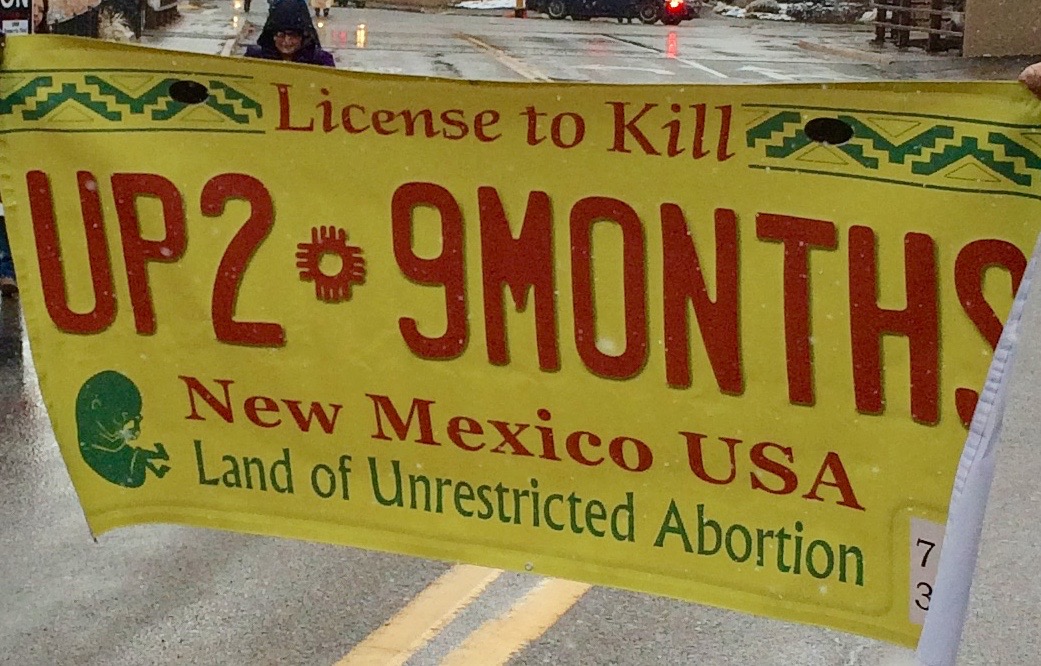
AMERICA ON THE BRINK — WHERE DOES NEW MEXICO LEADERSHIP STAND?
New Mexico at a Crossroads: Sovereignty, Public Safety, and Child Well-Being Under Scrutiny
By Bud Shaver,
Albuquerque, New Mexico — As global instability rises and national security concerns intensify, leadership choices are no longer abstract. Border enforcement, violent crime, energy independence, constitutional rights, and the protection of children are not theoretical debates — they are immediate realities shaping New Mexico’s future.
At moments of national seriousness, presence matters. While the nation gathered for the State of the Union to confront escalating global and domestic challenges, all but one member of New Mexico’s Democrat delegation chose not to attend. The absence was widely noted.
This was not passive absence.
It was a deliberate political statement.
President Trump’s address emphasized economic nationalism, border security, energy independence, and what he described as renewed “America First” strength. He highlighted tax cuts, deregulation, domestic manufacturing growth, tougher trade enforcement, stricter immigration policy, expanded support for law enforcement and the military, and stronger domestic energy production — framing his agenda as restoring sovereignty and stability through strength.
In a time of elevated border pressure and global uncertainty, those themes defined the national conversation.
The contrast was unmistakable.
“When the nation confronts crisis, leaders show up. Choosing not to is not neutrality — it’s a declaration.”
Tara Shaver of Abortion Free New Mexico said posture communicates priorities:“In serious times, presence signals alignment. Boycott signals opposition. Voters notice the difference.”

(Boycotting American Progress? – State of Disunion)
New Mexico is not a distant observer in national policy debates. It is a border state. Federal immigration enforcement decisions directly impact communities across the state — from rural counties to urban centers. Yet recent legislative sessions advanced measures limiting certain forms of cooperation with federal immigration authorities. Counties seeking stronger alignment with federal enforcement efforts have reported resistance and, in some cases, financial pressure.
At a time when border security remains a top national concern, Shaver argues that voters deserve clarity on the state’s direction.
“If strengthening sovereignty is essential in dangerous times, why is New Mexico moving away from it?”
Energy policy presents another contradiction. New Mexico’s public education system and state budget rely heavily on oil and gas revenue. Historic budget surpluses in recent years have been fueled by domestic energy production. Those revenues support schools, infrastructure, and public services across the state.
Yet alongside that reliance, policy pressure continues targeting the very industry funding those programs. Relying on energy revenue while politically constraining domestic production reflects a serious policy contradiction.
Public safety further intensifies the concern. New Mexico consistently ranks among the highest states nationally in violent crime. Communities continue to face persistent safety challenges. Meanwhile, legislative sessions prioritized expanded firearm restrictions — proposals slowed or narrowed only after public scrutiny.
Shaver contends that priorities matters.
“When crime ranks among the highest in America, targeting constitutional rights of law-abiding citizens is not leadership — it’s misdirected priorities.”
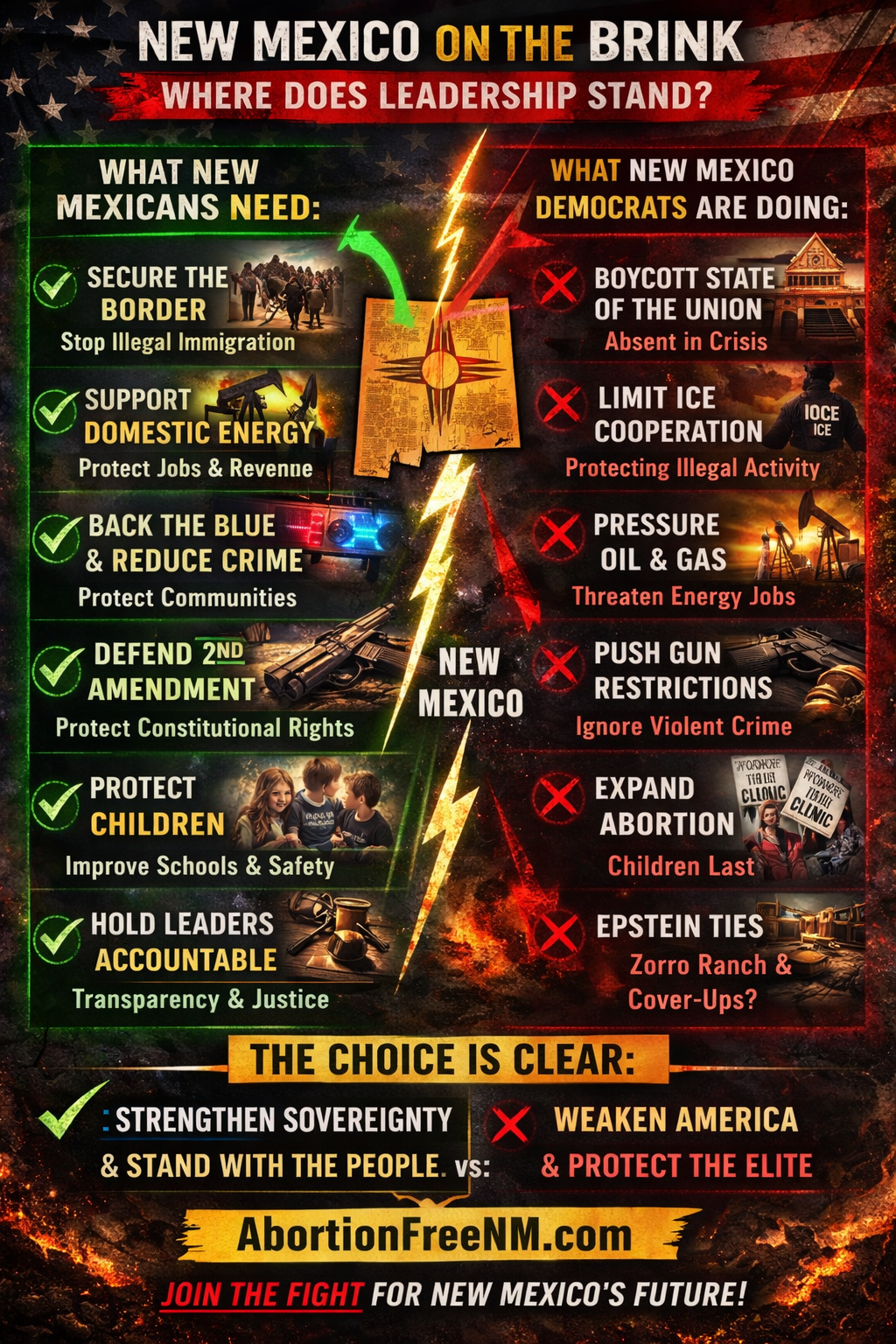
(New Mexico on the Brink – What New Mexicans Need vs What Democrats Are Doing)
Children, Outcomes, and Contradiction
Perhaps the most sobering contradiction involves children.
According to the Annie E. Casey Foundation’s national rankings, New Mexico has consistently ranked near 50th in child well-being indicators, including education and economic stability metrics. Literacy proficiency and graduation readiness remain persistent statewide concerns.
At the same time, New Mexico has positioned itself as one of the most permissive abortion states in the country, expanding access and reducing certain reporting requirements. According to the Guttmacher Institute’s 2023 provider survey estimate, New Mexico reported approximately 21,000 abortions in a single year, including a significant number involving out-of-state patients.
Shaver addressed the contradiction directly:
“New Mexico leadership says it cares about children — but continues expanding abortion while our state ranks near last in child well-being. You cannot claim to protect children while expanding policies that end their lives before birth.”
She continued:
“If children matter, every child matters — including the child in the womb.”
The organization argues this is not merely ideological. It is about coherence. If public policy claims to prioritize children, measurable improvements should follow.
Accountability Remains a Defining Issue
Accountability was a recurring concern throughout this legislative session. Multiple proposals affecting transparency, reporting standards, and enforcement oversight raised questions about whether public scrutiny is expanding — or contracting.
As national conversations intensify around elite networks and political responsibility, one fact remains:
Zorro Ranch was not in Washington, D.C. — it was in Santa Fe County, New Mexico.
Jeffrey Epstein operated there for years. Public records show the ranch was purchased in 1993 from the family of former Democratic Governor Bruce King — a documented real estate transaction. That fact alone does not imply wrongdoing by the King family. However, it confirms that Epstein’s operations were rooted in this state.
Former Democratic Governor Bill Richardson was later publicly named in reporting tied to Epstein, and amid controversy, the University of New Mexico removed his name from a campus building.
These developments underscore a broader point: when national scrutiny intensifies, New Mexico cannot assume distance from the issue.
Shaver said accountability must be consistent.
“If transparency is demanded nationally, it must be applied locally. Accountability cannot be selective. If oversight is the standard, it begins at home.”
During this legislative session, AFNM’s reports raised additional concerns about transparency, reporting requirements, and regulatory enforcement in other policy areas as well. Shaver argues that accountability is not partisan — it is structural.
“Public trust is not built by shielding institutions from scrutiny. It is built by allowing scrutiny and welcoming independent review.”
When oversight appears limited and public questions remain unresolved, confidence erodes. And when confidence erodes, accountability becomes more urgent — not less.
Election Integrity and Sovereign Authority Under Review
Beyond border policy and public safety metrics, additional questions have emerged surrounding election integrity and sovereign authority.
New Mexico does not require documentary proof of citizenship to register to vote. While federal law prohibits non-citizens from voting in federal elections, registration processes rely primarily on attestation rather than mandatory document verification.
In addition, access to voter rolls has remained shielded from certain independent audit efforts. State officials maintain that existing safeguards are sufficient. However, critics argue that verification strengthens confidence, while limitation of independent review weakens public trust.
Shaver framed the issue as one of transparency rather than accusation.
“If our system is secure, why resist greater transparency?”Shaver asked.
“Confidence in elections comes from verification, not assurances.”
The organization emphasizes that raising questions about verification is not an allegation of fraud, but rather a call for strengthened public confidence during a time of heightened national sensitivity around election security.
In moments of instability, transparency becomes stabilizing.
Law Enforcement Eligibility Expansion (SB 364)
In 2025, New Mexico enacted legislation allowing illegal aliens to qualify for law enforcementpositions.
Supporters argue the change expands the applicant pool and reflects modern workforce realities. Critics, however, argue that the policy alters long-standing citizenship expectations for positions carrying sovereign authority.
Law enforcement officers exercise arrest power, use-of-force authority, and public trust responsibilities. For generations, those roles have been closely associated with citizenship status.
Shaver raised concerns about the timing and optics of the policy shift.
“Law enforcement carries sovereign authority — arrest power, use of force, public trust,” Shaver stated.
“Why are we lowering citizenship expectations at the very moment national security concerns are rising?”
The organization argues that such changes, when combined with broader debates over immigration enforcement cooperation, warrant public scrutiny and open discussion.
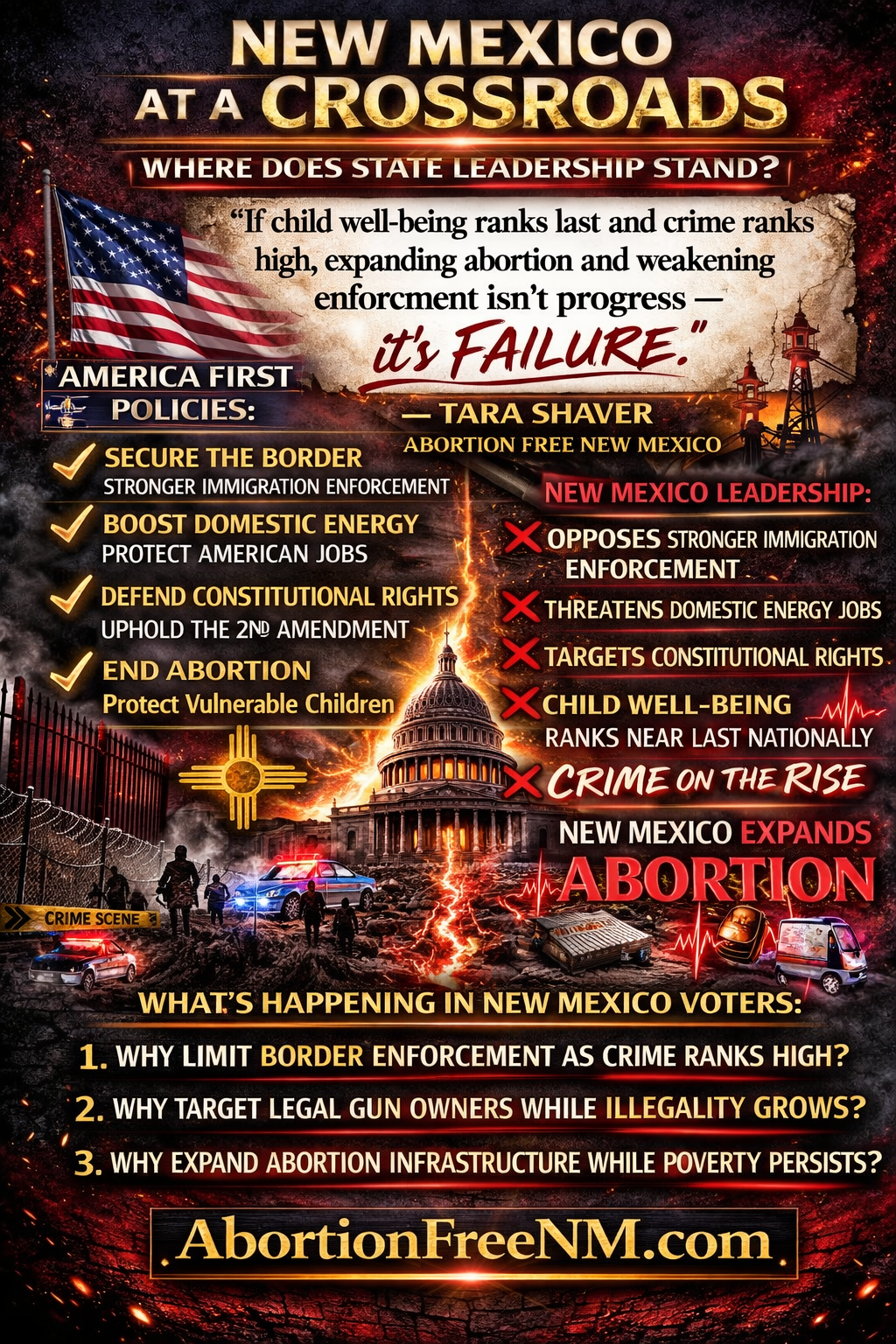
(Hard Questions for New Mexico Leaders)
A Broader Pattern of Direction
When examined individually, each of these issues can be debated on its own terms. But when viewed collectively, a consistent contrast emerges — particularly in relation to President Trump’s stated America First agenda.
President Trump has framed his national priorities around border enforcement, domestic energy production, strengthened law enforcement standards, election verification, constitutional protections, and opposition to abortion expansion. In each of those areas, New Mexico’s current leadership has advanced policies that move in a different direction.
On immigration enforcement, cooperation has been limited in a border state. On energy, regulatory pressure has increased despite record revenue dependence. On firearms policy, additional restrictions have been prioritized while violent crime remains elevated. On abortion, infrastructure has expanded even as child well-being rankings remain near the bottom nationally. On election integrity, expanded verification proposals encounter resistance framed as unnecessary.
Taken together, these are not minor disagreements. They represent a sustained policy divergence.
Tara Shaver says voters should evaluate that divergence carefully.
“President Trump has been clear about his America First priorities,” she said.
“New Mexico leadership has been equally clear about moving in a different direction. Voters deserve to ask whether that direction is producing better outcomes for families here at home.”
The question, she argues, is not about personalities but priorities.
If the national agenda emphasizes sovereignty, domestic production, constitutional defense, and stronger enforcement — and state leadership consistently advances alternatives — then voters are justified in asking what framework is guiding those decisions.
“When policy repeatedly conflicts with border security, energy strength, law enforcement standards, and protection of children, people are going to ask: What vision is driving this?” Shaver said.
The organization reiterates that its concerns are framed around measurable outcomes and governance direction, not personal allegations.
As America confronts global instability, domestic unrest, and rising security questions, the cumulative pattern of policy choices in New Mexico is drawing increased scrutiny.
- Border enforcement questioned.
- Energy production pressured.
- Violent crime elevated.
- Child well-being near last.
- Abortion expanded.
- Election verification debated.
- Sovereign authority standards adjusted.
- All but one member of the delegation absent during a defining national address.
Shaver says the cumulative pattern is what voters must evaluate.
“These are not isolated policies. They reflect ideological alignment. And alignment determines outcomes.”
America faces serious global and domestic challenges. In serious times, governance priorities matter. Transparency should not be feared. Verification should not be resisted. Sovereignty should not be diluted. Children should not be overlooked. Public safety should not remain stagnant.
These are not partisan slogans. They are foundational expectations of accountable leadership.
All eyes are on New Mexico.
Leadership is measured not by slogans, but by results. Not by symbolism, but by substance.
The question before New Mexicans is not abstract.
Will New Mexico leadership fortify the state — strengthen sovereignty, improve child outcomes, enhance public safety, and increase transparency — or continue policies that fail to improve measurable results at a moment when America stands on the brink?
That is the debate now unfolding in New Mexico.

You May Also Like

Children In New Mexico Are Dismembered Every Day

Survivors ABQ Pro-Life Conference: Mark Harrington, “Killers Among Us”