By Bud Shaver,
Albuquerque, New Mexico — As Governor Michelle Lujan Grisham frames medical malpractice reform as a defining part of her legacy, Abortion Free New Mexico is warning that the state is actively undermining those goals by shielding abortion clinics from the very safety standards that prevent patient injury and reduce malpractice exposure across healthcare.
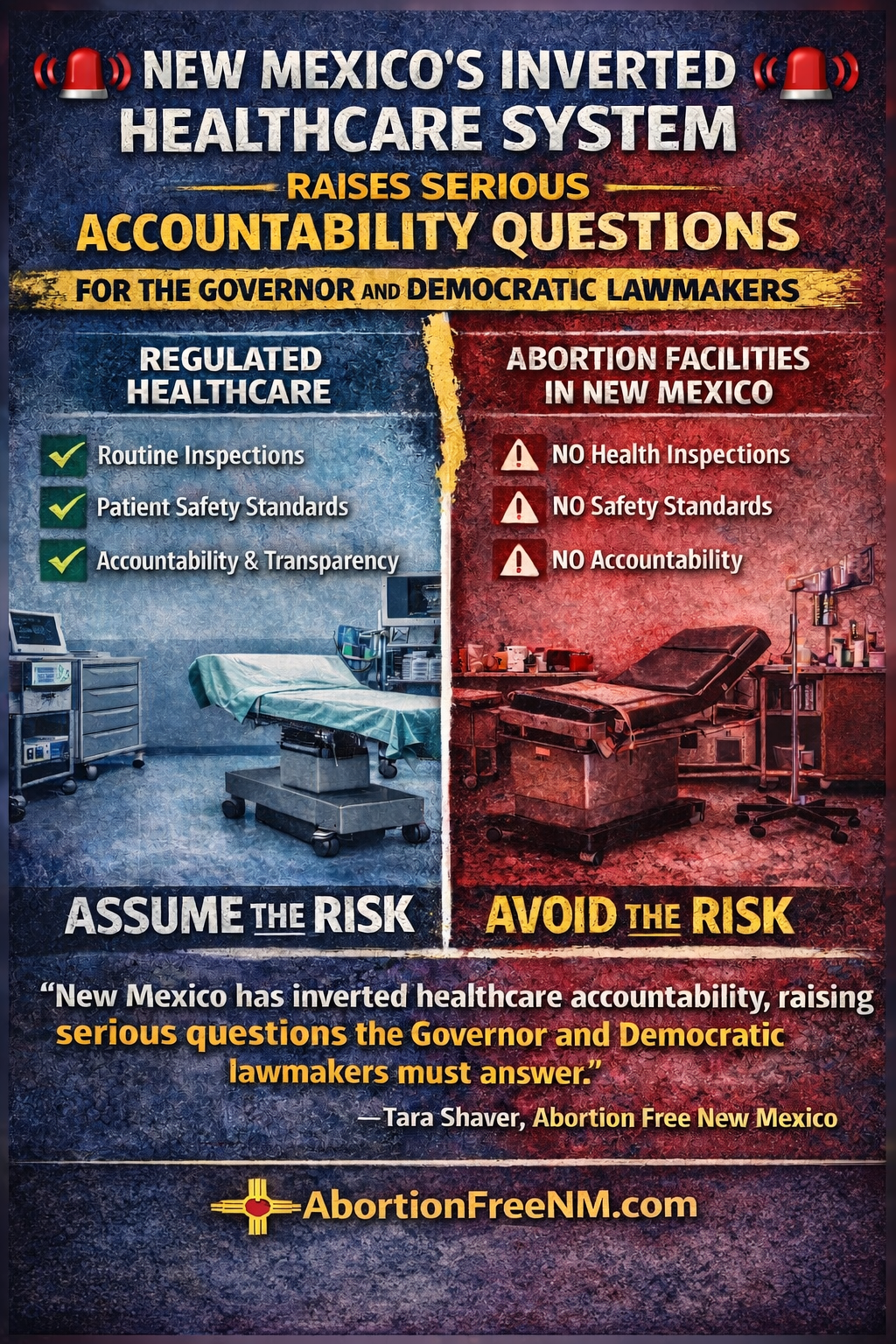
Graphic: “New Mexico’s Inverted Healthcare System” — comparing regulated healthcare oversight with abortion facility exemptions.Governor Lujan Grisham has repeatedly argued that high malpractice liability and insurance costs are driving physicians out of New Mexico — particularly from rural and underserved communities — and has stated she will not leave office without medical malpractice reform. Reporting by the Santa Fe New Mexican shows significant political spending by trial lawyer interests to block those reforms at the Roundhouse, intensifying pressure on doctors who practice under traditional medical standards.
The Governor has described malpractice reform as a must-deliver priority for her administration, telling lawmakers they “have to get it done.”
Yet while legitimate physicians face escalating liability, regulatory burdens, and shrinking legal protections, abortion clinics in New Mexico continue to operate without routine licensing, inspections, or public accountability — despite being repeatedly labeled “healthcare” by state officials.
“New Mexico is driving real doctors out while shielding abortion clinics from basic healthcare standards,” said Tara Shaver, spokeswoman for Abortion Free New Mexico. “That is not progress — it’s a regulatory failure with real consequences for patients.”
Abortion Free New Mexico’s newly released report, published on the opening day of the 2026 legislative session, documents more than a decade of abortion-related injuries, emergency transports, and at least one documented patient death occurring in facilities that are not licensed as healthcare facilities and are not subject to routine state health inspections or publicly available inspection reports.
“Healthcare requires standards, inspections, and accountability — and it does not maim or kill,” Shaver said. “Abortion fulfills none of those requirements in New Mexico, yet it is repeatedly labeled ‘healthcare’ while being exempt from the rules that govern real medicine.”
Shaver said the contradiction at the heart of New Mexico’s healthcare crisis is becoming impossible to ignore.
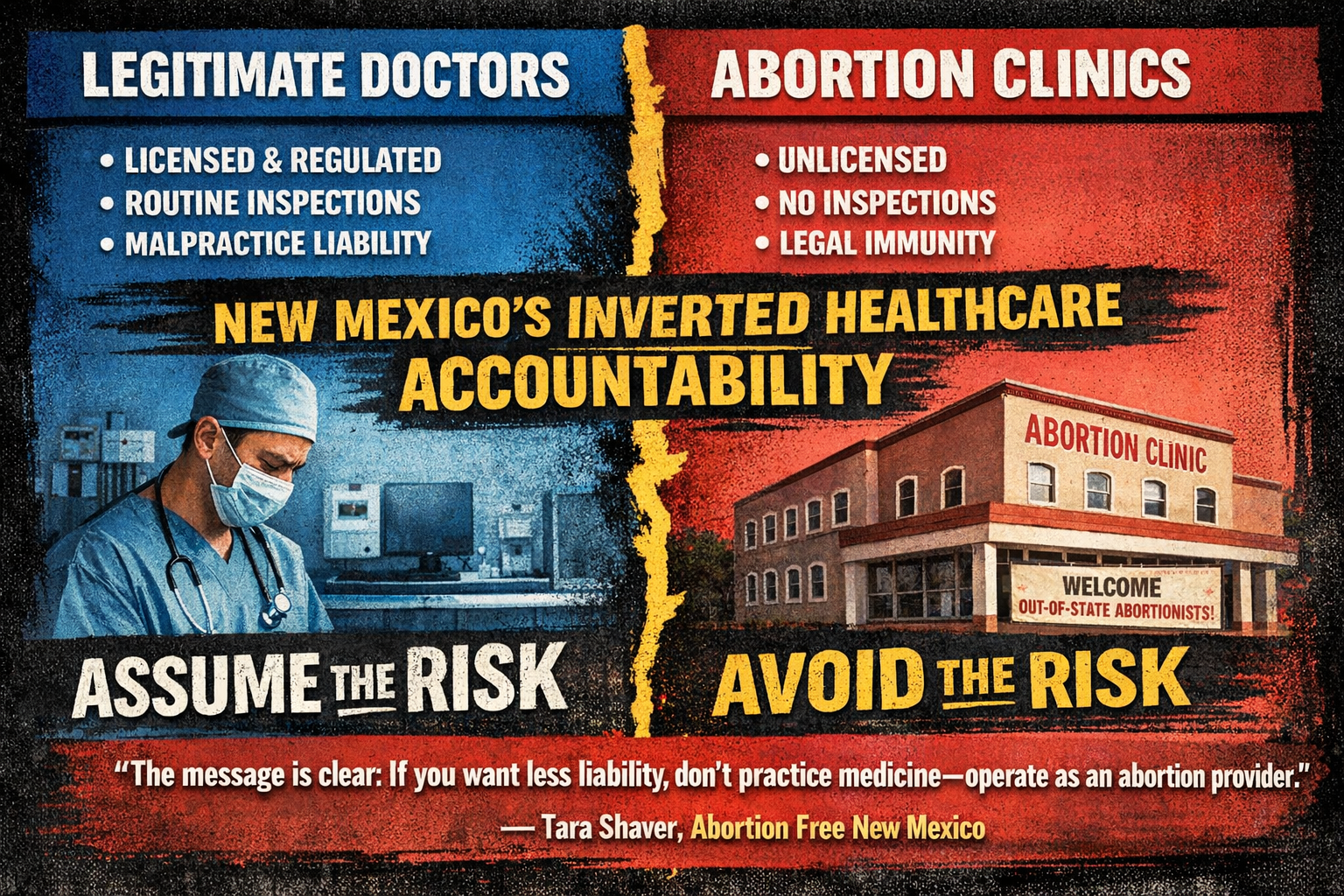
“New Mexico has inverted healthcare accountability,” Shaver said. “Doctors who follow standards assume the risk. Abortion clinics that are exempt from standards are protected. The message to physicians is unmistakable: if you want fewer legal and liability consequences, don’t practice medicine — operate as an abortion provider. That isn’t healthcare. It’s regulatory favoritism.”
The organization notes the irony is stark:
• Doctors and hospitals face increasing malpractice exposure tied to patient injuries, driving providers out of the state.
• Abortion providers, by contrast, are insulated from facility-level oversight that exists precisely to prevent harm and limit liability.
• Taxpayer dollars are being used to expand abortion infrastructure, recruit out-of-state abortion providers, and fuel interstate abortion travel — while the state refuses to impose the baseline safety standards required of other medical providers.
At the same time New Mexico struggles to recruit and retain physicians, the state has positioned itself as a hub for high-volume, out-of-state abortion care — increasing patient volume and risk while leaving the public without transparency or accountability when injuries occur.
“If malpractice liability is driving doctors away, the solution cannot be to exempt one category of care from safety standards while demanding reform everywhere else,” Shaver said. “You don’t reduce liability by removing oversight — you reduce liability by preventing harm.”
Abortion Free New Mexico is calling on the Governor and lawmakers to publicly explain why abortion clinics remain shielded from licensing, inspections, and public accountability — even as malpractice reform is promoted as a legacy-defining priority.
“This is not about access,” Shaver said. “It’s about accountability. You cannot claim to protect patients while exempting one category of care from the standards that define healthcare everywhere else.”
Relevant reporting and documentation:
- Santa Fe New Mexican — Campaign finance records show big spending in malpractice fight
- Santa Fe New Mexican — Governor talks about legacy, says she’s not leaving office without medical malpractice fixes
- Abortion Free New Mexico report — Opening Day of the 2026 Legislative Session
About the Author