Legislative Session Nears: Abortion Oversight Report
By Bud Shaver,
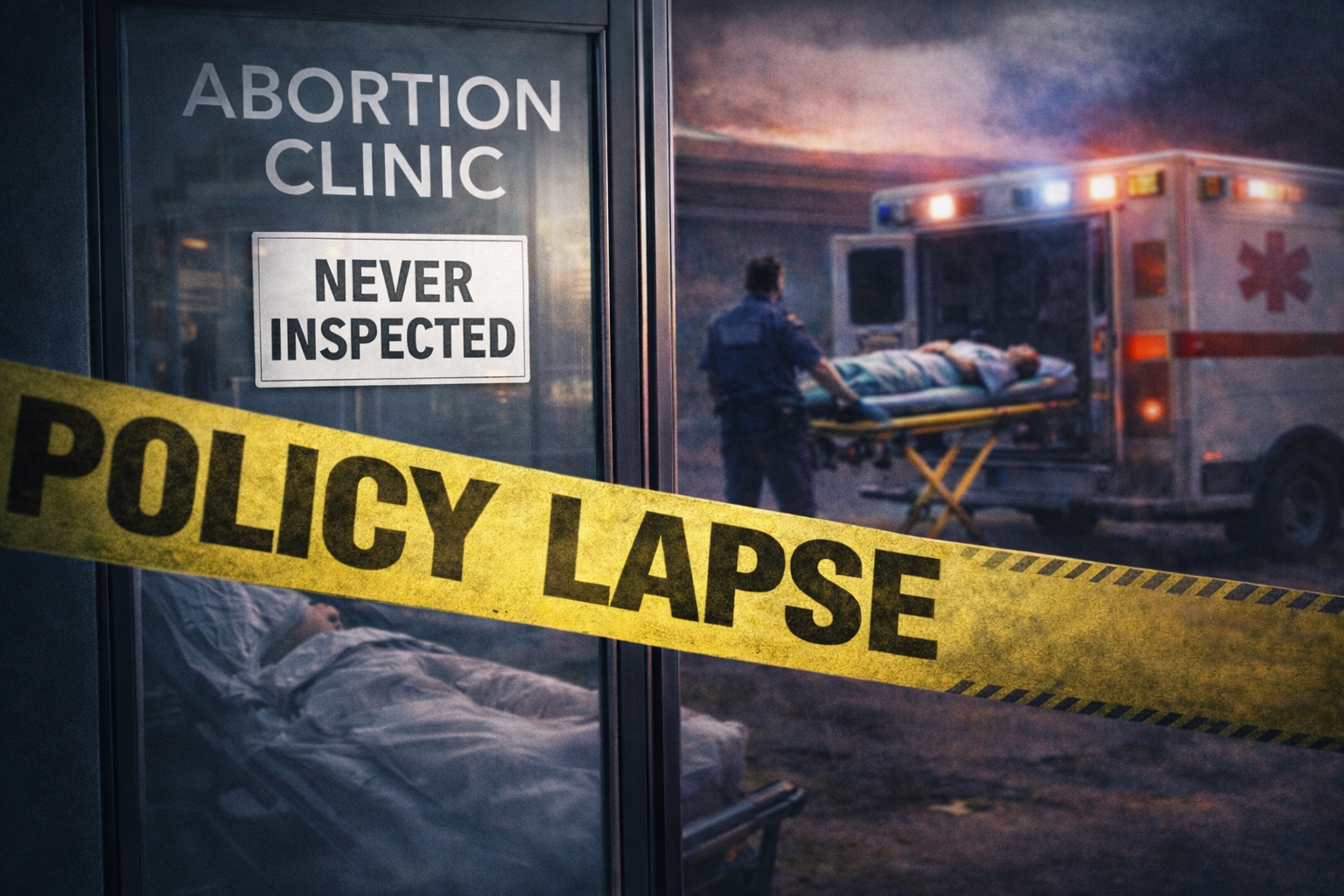
Albuquerque, New Mexico — As the 2026 New Mexico Legislative Session begins January 20, Abortion Free New Mexico has released a comprehensive report documenting a longstanding regulatory gap in state healthcare policy: abortion clinics in New Mexico are not subject to routine health inspections under state law, even as abortion volume and out-of-state patient travel continue to increase.
The report, titled New Mexico’s Abortion Oversight Gap: Expanded Access Without Routine Health Inspections, compiles more than a decade of public records, emergency response data, court filings, and investigative reporting related to abortion-related injuries, medical emergencies, and patient harm in New Mexico.

“New Mexico has made deliberate policy choices to expand abortion access and welcome out-of-state patients, while simultaneously exempting abortion clinics from routine health inspections,” said Tara Shaver, spokeswoman for Abortion Free New Mexico. “Our report documents the real-world consequences of that contradiction and raises serious questions about patient safety.”
According to the report, more than 50 abortion-related injuries and medical emergencies have been identified in New Mexico since 2010, including at least one documented patient death. None of these incidents were uncovered through a routine inspection process, because abortion clinics are not placed on a regular inspection cycle comparable to hospitals, nursing homes, or ambulatory surgical centers.
The report also clarifies that while some abortion facilities maintain federal Clinical Laboratory Improvement Amendments (CLIA) certification, CLIA applies only to laboratory testing standards and does not evaluate abortion procedures, facility conditions, infection control, emergency preparedness, or overall patient safety.
“This is not a debate about abortion access,” Shaver emphasized. “It is a question of whether the state applies basic, consistent health and safety standards across medical facilities. Routine inspections are a baseline safeguard. Abortion clinics remain exempt by policy choice.”
Political Control and Accountability Context
New Mexico’s abortion oversight framework exists within a broader political environment characterized by unified Democratic control across all major branches of state government.
As of the current legislative session:
- New Mexico Senate (42 seats): 26 Democrats / 16 Republicans
- New Mexico House of Representatives (70 seats): 44 Democrats / 26 Republicans
- U.S. House of Representatives (New Mexico – 3 seats): 100% Democratic
- U.S. Senate (New Mexico – 2 seats): 100% Democratic
- New Mexico Supreme Court: 5 Democrats (5 of 5 justices)
- Governor: Democrat
Because abortion clinic inspection and licensing standards are established through state statute and regulation, responsibility for oversight rests squarely with state policymakers.
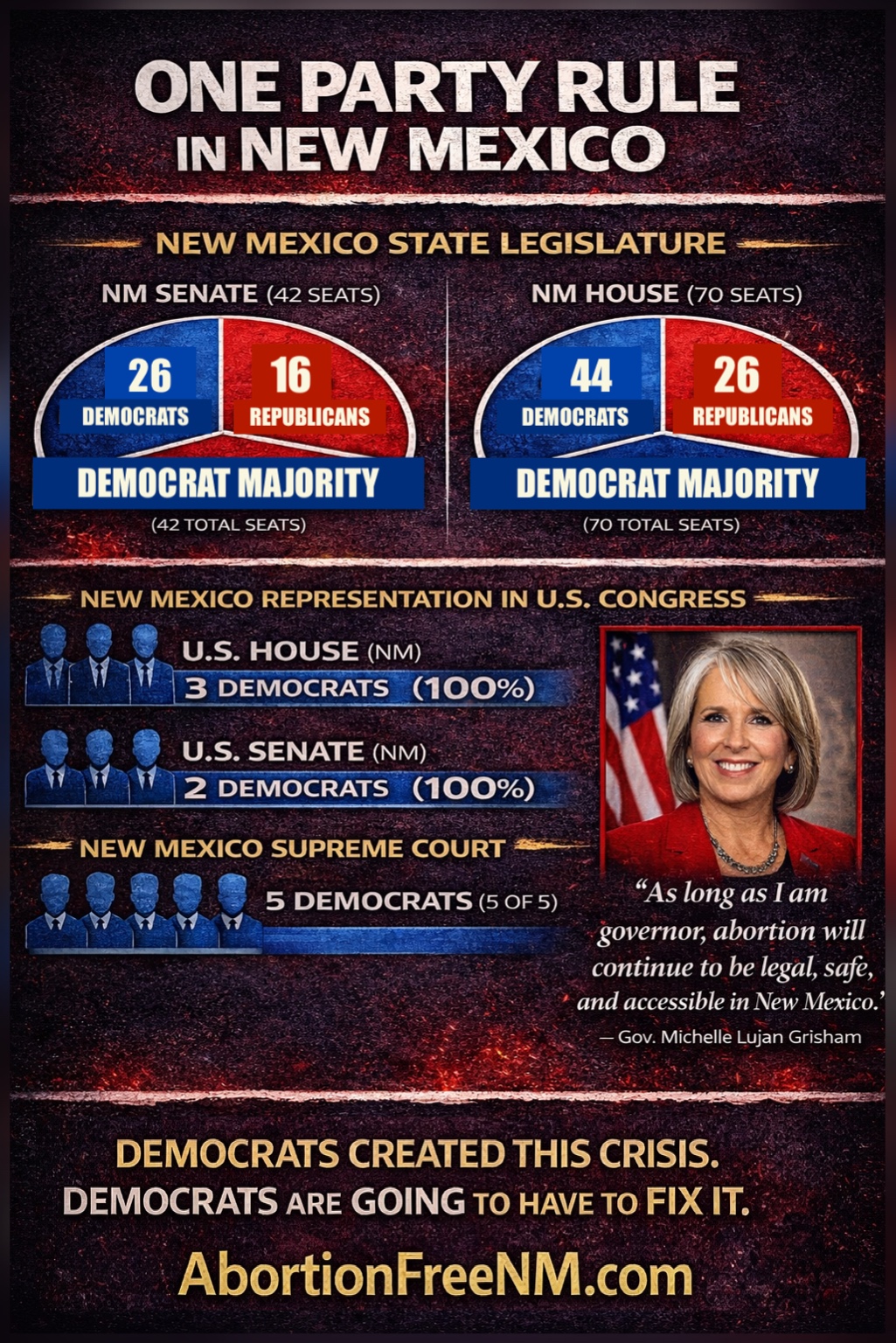
Governor Michelle Lujan Grisham has publicly stated:
“As long as I am governor, abortion will continue to be legal, safe, and accessible in New Mexico.”
Abortion Free New Mexico notes that safety is not achieved through declarations alone, but through enforceable oversight mechanisms established in law. If patient safety is a genuine priority, ensuring that abortion clinics are subject to routine health inspections comparable to other medical facilities is a necessary and measurable step.
“History suggests that policymakers who prioritize abortion access above all else are reluctant to impose routine oversight on abortion facilities, even when safety concerns are documented,” Shaver said. “That doesn’t mean reform is impossible — but it rarely happens without sustained public scrutiny.”
Because New Mexico’s abortion oversight framework is a product of unified legislative and executive control, accountability for correcting documented failures rests with the same policymakers who enacted the current system.
Legislative Authority and Responsibility
“As the Legislature considers healthcare priorities during the 2026 session, policymakers have an obligation to examine abortion clinic oversight statutes in light of what the public record already shows,” said Shaver.
“Documented injuries, medical emergencies, and the absence of routine health inspections are not abstract concerns — they are measurable outcomes of policy choices. When facilities are exempt from baseline oversight, risks are addressed only after harm occurs. The Legislature has the authority to review this framework, and with that authority comes responsibility.”
Report and Documentation
The full report, including a timeline of documented incidents and supporting source material, is available online:
Related Analysis
(Examines the broader political and regulatory context in which healthcare oversight decisions are made.)

You May Also Like

Week 5: United In Prayer and Fasting to End Abortion In New Mexico

ALABAMA SENDS ABORTIONISTS TO JAIL, WHILE IN WASHINGTON DC PEACEFUL PRO-LIFERS FACE JAIL TIME